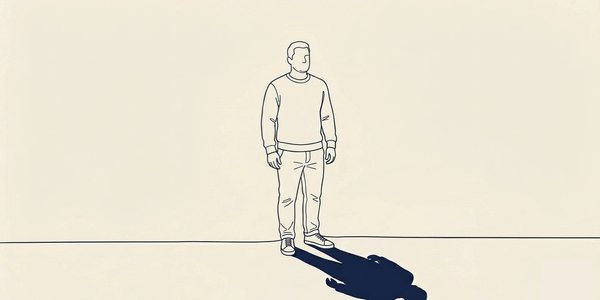
I've learned to watch the room, not the leader. When someone stands at the front and takes responsibility out loud, the people listening can already tell. Long before the words are finished, they feel the difference between a leader who is actually reckoning with what happened and one who is performing the reckoning. That knowing is real, and it's worth trusting. Most of what we've built around leadership accountability is designed, quietly, to talk them out of it.
The all-hands meeting is running long. The CEO is at the front of the room.
The quarterly results missed the target. Two product launches were delayed. Three senior people left in eight months. The CEO is now acknowledging this publicly, clearly, and with evident regret. They take responsibility. They name what went wrong. They commit to doing better.
Six months later, nothing has changed.
The same structural problems that produced the missed targets are still in place. The culture that made it difficult for senior people to stay has not shifted. The decisions that led to the delayed launches are still being made by the same people, using the same process, with the same incentives.
This is not accountability. This is the performance of accountability. And the distinction, which should be obvious, has become genuinely difficult to make in contemporary leadership culture because the performance has become so polished, so earnest, and so widely rewarded that it has almost entirely displaced the thing it was supposed to represent.
The Anatomy of the Performance
Performative accountability has a recognizable shape. It begins with acknowledgement, often genuine, often expressed with real emotion, and it ends there. The acknowledgement is the event. What follows is the expectation that the acknowledgement itself constitutes the accountability, that naming what went wrong is the same as taking responsibility for it.
It is not. Acknowledgement is the minimum requirement for accountability, not its completion. Real accountability requires something that acknowledgement does not: the willingness to let the consequences of what happened actually land. To change the conditions that produced the problem. To accept the cost of genuine responsibility rather than managing the appearance of it.
The gap between these two things, acknowledgement and genuine accountability, is where most leadership accountability fails. And the reason it fails is not primarily dishonesty. Most leaders who perform accountability are not consciously deceiving anyone. They genuinely believe, in the moment, that the acknowledgement represents a commitment to change. What they have not yet confronted is how much change is actually required, and how much it will cost them personally.
Acknowledgement is the minimum requirement for accountability, not its completion. Real accountability requires you to let the consequences actually land.
Why the Performance Gets Rewarded
Performative accountability persists because the systems around it reward it. This is the organizational dimension of the Human Problem: institutions that have been built on the separation of image and integrity end up with incentive structures that reinforce the former at the expense of the latter.
The leader who takes accountability publicly, who demonstrates the emotional literacy and the apparent willingness to own a failure, earns credibility points that often survive the absence of any actual change. The audience, internal or external, wants to believe the performance. It is uncomfortable to remain skeptical of someone who has just said all the right things with apparent sincerity.
This is not cynicism. It is a description of how human social systems work. We are deeply influenced by signals of acknowledgement and remorse, even when those signals are disconnected from any behavioural change. The performance exploits something real about how we respond to each other.
The cost is borne by the people inside the organization who see the gap between the performance and the reality, who are asked to extend trust to a leader who has just acknowledged failing them, and who learn over time that acknowledgement in this culture means nothing. That learning is not invisible. It becomes part of the culture itself.
The people inside the organization see the gap between the performance and the reality. Over time, that seeing becomes the culture.
What Real Accountability Actually Requires
Real accountability is not primarily a communication act. It is an interior one. It begins with the genuine willingness to feel the full weight of the impact of a decision, not to manage that weight, not to contextualize it, not to distribute it across contributing factors, but to let it land.
This is harder than it sounds. Most leaders in positions of authority have developed, necessarily, significant capacity to manage their own emotional responses to the consequences of their decisions. The distance this creates is functionally useful; it allows leaders to continue making difficult decisions without being paralyzed by their aftermath. But it also makes it very easy to skip the step of genuinely reckoning with what happened.
Real accountability requires that step. Not as performance, not as visible emotion in a public setting, but as a genuine interior reckoning with the human impact of a decision and with what that impact demands in response.
The visible expression of that reckoning is what we recognize as real accountability. I've been in the room for it, and it's almost never the composed thing you'd expect. Because it is genuine, it tends to be less polished, less articulate, less emotionally managed than the performance. It sounds like someone who has actually sat with something difficult, not someone who has prepared a statement about it.
Genuine accountability tends to be less polished than the performance. It sounds like someone who has actually sat with something difficult.
What It Means to Be Genuinely Responsible
Genuine responsibility for a decision and its consequences means being willing to change the things that produced the outcome, even when those things are structural, political, or personally costly to change. It means accepting consequences that the performance would typically manage away. It means being honest, specifically and concretely, about what you are going to do differently, and then doing it.
It also means not requiring the people who were harmed to supply the closure that the accountability is supposed to provide. One of the subtler forms of performative accountability is the leader who acknowledges impact but then expects the affected parties to absorb the discomfort of moving forward. Genuine accountability accepts that the discomfort belongs to the person who caused the harm, and that the timeline for rebuilding trust belongs to the people whose trust was broken.
None of this is comfortable. That is, in a sense, the point. Accountability costs something. The performance costs nothing, which is why it is preferred.
The Leadership That Becomes Available
I've watched what happens to leaders on the other side of this. The ones who have allowed the full weight of a failure to register, who have changed the conditions that produced it, who have accepted the cost of genuine responsibility, tend to lead differently afterwards.
Not because they have become more cautious or more self-critical. But because the experience of genuine accountability builds something in a leader that the performance never does: the specific authority that comes from having been through something real and come out of it with your integrity intact.
Teams can feel the difference. Not as a theory, but as a lived experience of being led by someone who has proven, in a specific and concrete situation, that they are willing to be genuinely responsible for the human impact of their decisions.
That is the kind of leadership that accountability was always supposed to build. It just requires, first, the willingness to stop performing it.
Think of a decision in the past year where you said the right things but did not change anything of consequence. Be specific. What was the decision? What did you acknowledge? What would genuine accountability for that decision have actually required, concretely, not theoretically? What did it cost you not to do that? What would it cost you to do it now?
The Weekly Alignment
One short piece each week. Not advice, and nothing to keep up with. A reminder, arriving on a Thursday, that the ground was always there.
Unsubscribe any time. Nothing else is sent.