I have sat in that room more times than I can count.
The values workshop: two hours with a facilitator, sticky notes on the walls, a real conversation about what this organization stands for. By the end of the session there is a list, usually five to eight values, and usually good ones: integrity, collaboration, courage, care. They come out of a process that genuinely meant something to the people in the room.
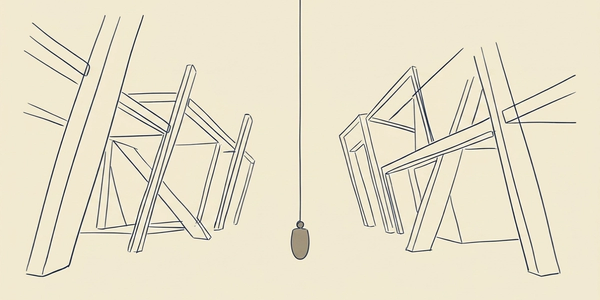
Six months later, nothing has changed. Not because the values were wrong. Not because the people in the room were insincere. But because the values exist in one place and the decisions that reveal what the organization actually values are made somewhere else entirely, by a different logic, in response to different pressures.
This is the alignment gap. And it is, in one form or another, in almost every organization that has gone to the trouble of naming its values, which is to say almost every organization.
Two Sets of Values
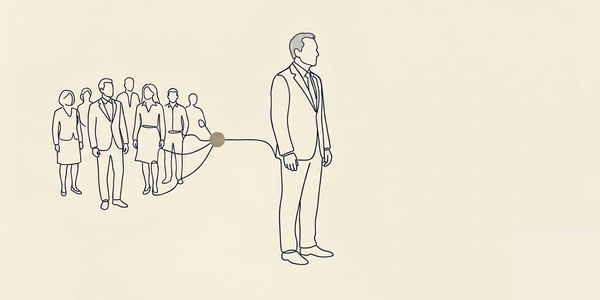
Every organization has two sets of values. The first are the stated values: the ones in the handbook, on the wall, in the job postings, in the all-hands presentations. These are the values the organization intends to be defined by. They are usually genuine, and they represent something real about what the founders or leaders believe good looks like.
The second are the enacted values: the ones revealed by what leaders actually decide when something is at stake, when the quarter is short and the numbers need to hit, when the senior person whose behaviour is problematic is also the highest performer, when doing the right thing by the team would cost the organization something material, when the values and the incentives point in different directions.
The enacted values are the real ones. They are what the organization is actually optimizing for, regardless of what is written on the wall. And I have watched this from the inside: the people without authority, the ones watching the decisions made above them, know it with great precision. They have been reading the gap between stated and enacted values since their first week.
The enacted values are the real ones. The people without authority have known this since their first week.
Where the Gap Comes From
The alignment gap is not primarily a product of bad faith. Most leaders who preside over organizations where stated and enacted values diverge are not cynically performing values they do not believe. They genuinely hold the stated values. The gap exists because the incentive structures, the accountability systems, and the cultural norms of the organization have not been redesigned to support the values being enacted under pressure.
Stated values are articulated in conditions of relative safety, in off-sites, in planning sessions, in contexts where the cost of choosing the values is theoretical. Enacted values are revealed in conditions of genuine pressure, when the cost is real, when something has to give, when the leader has to choose between what they said they stood for and what the short-term situation is demanding.
Most organizations have never built the infrastructure that would let the stated values survive that test. The performance systems reward output, not values-consistent behaviour. The promotion criteria are defined by results, not by how the results were reached. These are the real rules, the ones nobody wrote on the wall and nobody quite says out loud, and everyone learns to read them fast: the leaders who close the numbers by any means necessary are advanced, and the leaders who protect the team at the cost of the quarter are quietly questioned.
The gap, in this context, is almost structural. It is not a character problem. It is a design problem.
The alignment gap is almost always a design problem, not a character problem. The incentive structures were never built to make the values survivable under pressure.
The Human Cost of the Gap
The people who pay the highest price for the alignment gap are not the leaders who preside over it. They are the people who believed the stated values and organized their behaviour accordingly.
They raised the difficult issue because the values said to. They pushed back on the direction that felt wrong because the values said to. They invested in the team at the cost of their own output because the values said that was how good leadership worked here. And then they watched the decisions that revealed what actually works here, and discovered that the values were not operational. They were aspirational, and the aspiration was not backed by any mechanism that would make it real.
This discovery produces a specific kind of disillusionment that is different from ordinary workplace frustration. It is not just disappointment with a decision or a person. It is the loss of the belief that this place could be what it said it was. That loss tends to be permanent. People who have seen the gap clearly do not un-see it.
And underneath the disillusionment, what actually breaks is trust. Not trust in a single decision, but the deeper kind: the willingness to believe that what an organization says about itself is true. Someone who believed the stated values and built a way of working around them does not just get disappointed. They get careful. They read the next set of values, at the next organization, with the reservation of a person who took the words at face value once and watched them turn out to be decoration. That guardedness is a genuine cost, and almost no one counts it, because it never shows up in anything the organization measures.
The talent that leaves for this reason rarely says so in an exit interview. They say they are looking for new challenges, or that the opportunity was too good to pass up. The real reason, that they stopped believing the organization was what it said it was, tends to stay private, because saying it out loud carries costs. I have watched good people leave this way, and it is one of the quietest and most expensive things that happens in an organization.
The people who pay the highest price for the alignment gap are the ones who believed the stated values and organized their behaviour accordingly.
What Closing the Gap Actually Requires
Closing the alignment gap is not primarily a communications or culture-program challenge. It requires leaders to make decisions that are expensive by the standards of the existing incentive structure, and to do so consistently enough that the enacted values begin to shift toward the stated ones.
This means addressing the senior person whose performance is genuine but whose behaviour is values-inconsistent, rather than managing around them. It means making the quarter-end call that protects the team rather than the number, when those two things genuinely conflict. It means redesigning the promotion and performance systems so that values-consistent behaviour is actually measured and rewarded, rather than being a stated criterion that everyone knows does not determine outcomes.
None of this is comfortable. And none of it can be delegated to HR, or to a values refresh, or to another workshop. It requires individual leaders making individual decisions in specific situations that are genuinely costly. The gap closes one decision at a time, over a long period, through the accumulation of enacted choices that are consistent with the stated values. And a leader can only make those choices, again and again and at real cost, if they are standing on something steadier than the pressure they are standing in.
The Gap Begins Closer to Home
There is a version of this I have watched play out in room after room, and it is the one that stays with me. The same leaders who will spend two hours in real, rigorous argument about what the organization values, testing every word, will never once turn that enquiry on themselves. They can tell you precisely what the company stands for. Ask them what they stand for, underneath the role, and the room goes quiet.
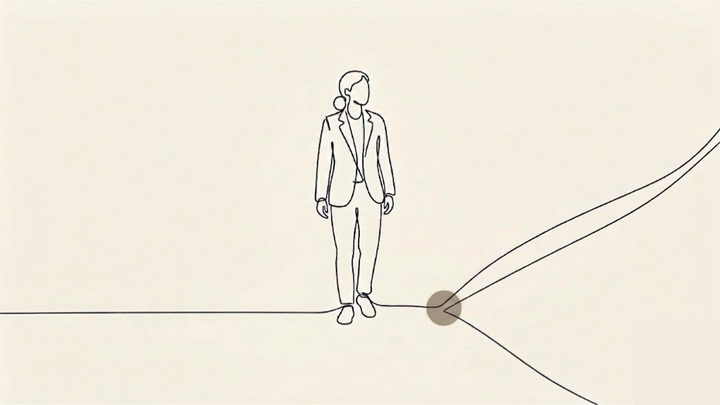
This is the alignment gap at the scale it actually begins. A leader who has not remembered their own values, who has not done the quieter work of knowing who they are beneath the title, has nothing steady to lead from when the pressure comes. They reach for the quarter, because the quarter is the thing telling them what they are worth this week. The distance between what they say and what they choose is the same gap, one scale down.
And the reverse is the most hopeful thing I know about leadership. A leader who remembers who they are, who holds their own values as a fact rather than a question, brings that clarity into every room they enter. They can keep the organization’s values under real pressure because they are no longer borrowing their worth from the outcome. The steadiness the whole thing depends on was never a technique. It was a person, remembering.
The Organization Where the Values and the Decisions Live in the Same Room
The alignment gap can be closed. It is not a permanent feature of organizational life. There are organizations where the stated and enacted values are genuinely close to each other, where the decisions that reveal what leadership actually values are consistent, over time, with what leadership says it values.
These organizations are not utopias. They make difficult decisions, they face genuine pressure, they do not always get it right. But the people inside them know that when there is a conflict between the values and the short-term numbers, the values have a genuine chance of winning. That knowledge produces a specific quality of trust that no culture program can manufacture. It is earned, slowly, through the accumulation of decisions where the stated values were enacted at real cost.
That is what culture actually is. Not the values on the wall. The decisions that show which values are real.
So if you are the leader reading this, holding a set of values you believe in and a set of decisions that do not always match them, the place to begin is not another workshop. It is the same question you would put to the organization, turned inward. Not what does the company value, but what do you, underneath the role. The gap out there will not close while the one inside the leader stays open, because you cannot hold a line for the organization that you have not first found in yourself. That is slower work, and quieter, and most of it happens away from the room. But it is the ground the rest of it stands on, and it starts the moment you are willing to ask the question and stay for the answer.
Name one decision your organization made in the past six months that was inconsistent with a stated value. Be specific: which value, what decision, what was the actual logic that drove the outcome. Now ask: what would the decision have looked like if the stated value had been genuinely enacted? What would it have cost? Who would have made a different argument? That cost, the cost of the decision you did not make, is the size of the alignment gap in that situation.
Then turn the same audit on yourself. Name one decision you made in that time that did not match a value you hold. Not the company’s value, yours. Ask what you were reaching for instead, and what it was telling you about your worth in that moment. The gap you find there is the one to start with, because it is the only one entirely in your hands.
The Weekly Alignment
One short piece each week. Not advice, and nothing to keep up with. A reminder, arriving on a Thursday, that the ground was always there.
Unsubscribe any time. Nothing else is sent.