There's a story we're supposed to tell about ending something we built. I've had the words for it for a while, and I've learned to be skeptical of it, the way I've grown skeptical of all the tidy stories we tell about the things that cost us something.
The supposed story goes like this: I built something. It ended. I learned from it. I am grateful for the journey. Growth sometimes looks like release.
All of that is true. And all of it comes after the part I want to actually write about, which is the interior experience of the ending itself, what it asks of you, what it reveals, what you discover when something you have made becomes, somehow, more you than you intended it to be.
What Happens When You Become the Project
I built BARKON for four years. What started in our Toronto kitchen as an idea for a functional hydration brand for dogs grew into something that occupied a significant portion of my interior life, not just my time, not just my energy, but my sense of who I was and what I was capable of and what kind of person I was becoming.
This is what building does. It is not unique to entrepreneurship. It happens in leadership roles, in organizations, in any sustained creative or professional project where enough of yourself goes into the work that the boundary between you and the work begins to dissolve. You stop having a project and start being it. Your identity and the project's identity fuse in ways you do not always notice until something threatens the project.
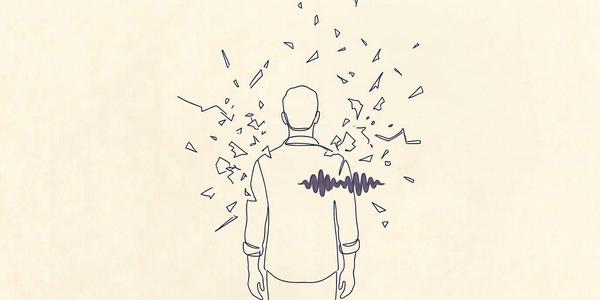
When a close, trusted partnership came apart, I discovered the degree of that fusion in the most direct way possible: the threat to the project felt like a threat to me. Not to my work or my time or my investment. To me. To the person I had been becoming through the building of this thing.
You stop having a project and start being it. You don't always notice the fusion until something threatens the project, and the threat feels personal because it is.
The Reckoning
The reckoning that followed was not about the project. It was about what I had made the project mean about me. What I had been using it to prove, to myself and to others. What had become quietly dependent on it continuing, not just my business plans, but my sense of my own worth, my sense of what I was building in the world, my sense of who I would be when the work was done.
Integrity matters more than momentum. Alignment matters more than attachment. These are the sentences I wrote in my journal in the summer I spent processing the decision to wrap up this chapter. They are true. They are also the sentences that are easy to write after you have made the decision and harder to reach from inside the pull of the attachment itself.
Because the attachment was real. The thing I was letting go of was not just a business. It was a version of myself that I had built alongside it, the founder, the builder, the person who was making something from nothing.
But there was another attachment underneath that one, and it was harder to look at. I was also holding onto being a friend, holding on tightly enough that I didn't want to admit what had actually happened between us. Naming the betrayal meant letting go of the version of me who could still call it a friendship, and for a long time I would rather have kept the story than face what was true.
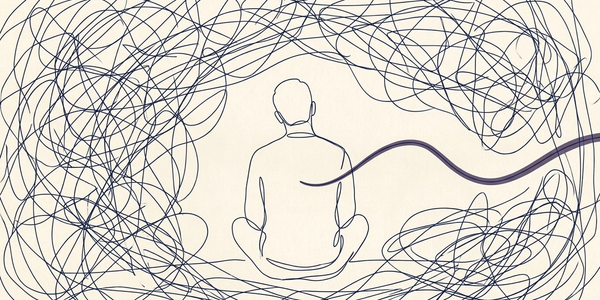
And the question underneath the decision was not, should I continue? It was: who am I if this is not who I am?
The question underneath the decision to let go is never about the project. It is about who you are without it, and whether that person can be enough.
What Letting Go Actually Requires
Letting go is often discussed as if it were primarily an act of courage, the brave decision to release what is no longer serving you. This framing is not wrong, but it arrives too quickly at the resolution. It skips the part where you have to sit with the question of whether what you are releasing is actually the project, or whether it is the identity you built around it, or whether those two things have become so fused that letting go of one requires letting go of both.
The answer, in my experience, is that they are both present. The project ends. And some of who you were in relation to it ends with it. Not all of it. Not the essential things. But the specific configuration, the self who was building this particular thing toward this particular horizon, that version does not survive the ending.
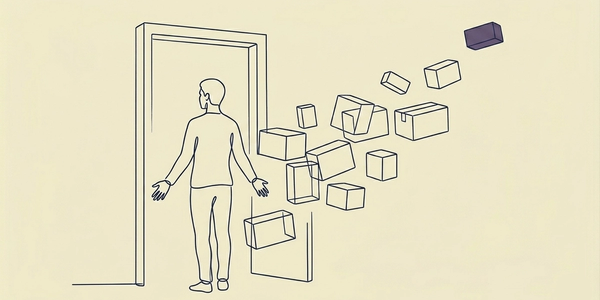
What I did not expect was that this would feel less like loss and more like homecoming.
Not immediately. Not in the summer of processing, which was genuinely difficult. But in the months that followed, there was a quality of return to something more essential, to the parts of myself that had been set aside or quieted or crowded out by the particular demands of building this project toward this outcome. The parts that were present before the identity fusion and had been waiting, patiently, to be accessible again.
I did not expect the ending to feel like homecoming. But there was a quality of return, to the parts of myself that had been waiting, quietly, for the project to be done with them.
What Remains
The belief does not disappear when the business ends. It evolves. I wrote this during the processing period, and it is still the truest thing I can say about what I carried forward.
What I built in those four years, the capabilities, the relationships, the specific knowledge of what I am capable of and what I am not, the clarity about where my values hold and where they bend under pressure, none of that ends with the company. It is more available to me now than it was before, precisely because it is no longer entangled with the project that produced it.
The thing I did not know before I built and ended something is this: the ending teaches you something that the building cannot. The building teaches you what you are capable of. The ending teaches you who you are when what you are capable of is no longer the most important thing in the room.
That knowledge, the specific, earned, interior knowledge of who you are when the project is gone, is more stable than anything the project can provide. It is, I think, what leaders who have built and released understand that those who have only built do not yet know.
The Interior Lesson
I work with leaders in the act of building their teams, their organizations, their practices, their careers. I understand, from the inside, the particular pull of the project: how it becomes a source of identity and purpose and evidence of worth, and how that fusion is simultaneously what drives extraordinary commitment and what makes it genuinely difficult to see clearly when the thing you have built is no longer the right container for who you are becoming.
The question I ask leaders now, more than any other: is this still yours? Not in the legal or organizational sense, but in the interior sense. Does this role, this project, this version of yourself still belong to you, or have you become its property?
The answer to that question is not always a reason to leave. Sometimes it is a reason to reinvent the relationship to what you have built. But the question matters. And it can only be asked honestly from the slow, interior place that this kind of examination requires, the place that is not performing an answer, but actually sitting with the question.
That is the interior work. And it is, I think, the most important work available to anyone who has built something they care about.
Think of something you have built or are building, a role, a project, a relationship, a version of yourself. Write for ten minutes on this question: is this still mine, or have I become its property? Notice the difference between the two. The first is a relationship you are in. The second is a relationship you are owned by. Both can look the same from the outside. Only one of them allows you to see clearly what the next thing should be.
The Weekly Alignment
One short piece each week. Not advice, and nothing to keep up with. A reminder, arriving on a Thursday, that the ground was always there.
Unsubscribe any time. Nothing else is sent.