There is a specific quality of thinking that only becomes available when you slow down enough to stay with a thought.
Not the quick thought, the first thought, the one you produce instantly, fluently, before you have had time to discover whether you actually believe it. That thought is fast. It is often well-formed. And it frequently has very little to do with what you actually think.
This is the problem that speed creates for self-knowledge in leadership. Not that it prevents thinking, but that it substitutes a faster, more socially fluent kind of thinking for a slower, more honest kind. And the faster kind is so much easier to produce, and so much more immediately rewarded, that many leaders have spent years perfecting it without ever stopping to examine whether it represents what they actually know.
Why Speed Is the Enemy of Self-Knowledge
Leadership culture rewards the fast response. The decisive read of the room, the clear articulation of a position, the ability to synthesize complexity into a direction that others can follow. These are genuine skills. They are also skills that require a leader to produce what sounds like their thinking before they have had time to discover what their thinking actually is.
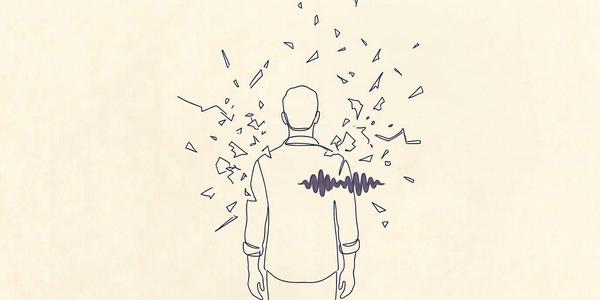
The performed thought and the actual thought are often close. But they are not the same. The performed thought is shaped by the room, by the expectations of the audience, by what a leader in this role is supposed to think about this question. The actual thought, the one that would emerge if there were no audience, no performance pressure, no need to have already figured it out, is different in ways that matter.
Self-knowledge, in its most useful form, is access to the actual thought. The one underneath the performance. And the problem with speed is that it makes the actual thought inaccessible, not because it is hidden, but because the performed thought arrives first and occupies the space before the actual thought has had time to form.
The performed thought arrives first. The actual thought needs time. Speed is the mechanism that keeps them apart.
What Writing by Hand Actually Does
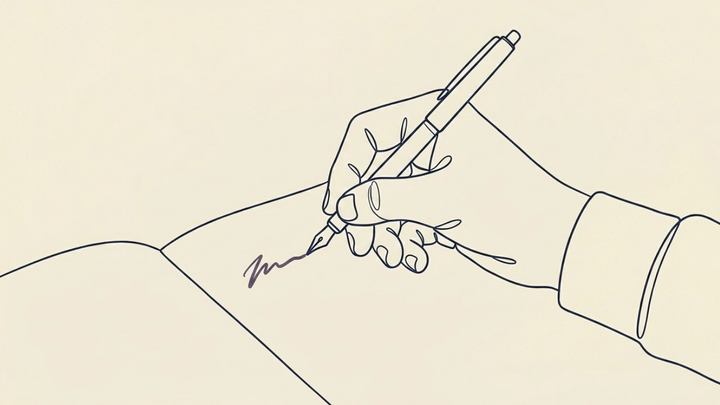
Writing by hand is slow. Not uncomfortably so, but slow enough to create a meaningful gap between the thought and its expression. That gap is where the practice lives.
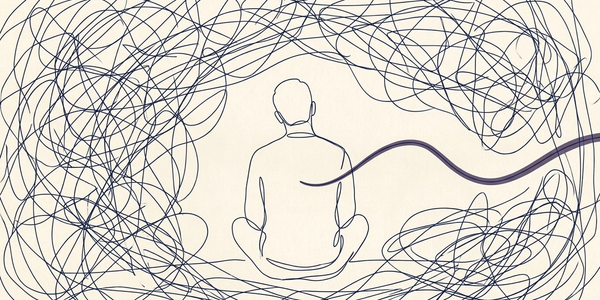
When you write by hand, the constraint of speed forces you to stay with the thought long enough to find out whether you actually believe it. You cannot type ahead of your thinking. The hand moves at the pace of the thought, not faster. When I do this myself, the moment always arrives the same way: in that enforced presence with what I am trying to say, I find that the thing I started writing is not what I actually meant, or that it is less complete than it seemed, or that there is something underneath it that is more true.
Writing by hand is a practice of staying. The reduction in speed forces you to remain with the thought long enough to find out whether you believe it, and then to find out what you actually believe instead.
Self-Confrontation, Not Self-Expression
The conventional framing of journaling and reflective writing positions it as self-expression, a way to externalize and process what you already know or feel. This framing is not wrong, but it undersells what the practice is actually capable of.
Writing by hand, done without a prompt and without a destination, is less about expressing what you know and more about discovering what you think. The page becomes a mirror rather than a canvas, not a place to put what is already there, but a surface that shows you things that were not visible until you tried to write them down.
Writing by hand is a practice of self-confrontation: the slowness forces a leader to stay with a thought until the thought they actually hold surfaces beneath the one they first perform. It isn't self-expression but self-recovery. What it returns is not a better thought but a truer one, already theirs, waiting under the performance. Leaders write by hand to remember what they think before the room told them what to think, and to lead from further in.
This is why the practice works better without prompts, at least initially. A prompt organizes the thinking before the thinking has had a chance to surface its own organization. The more useful instruction is simply: write. Write what is actually present. Write until the performed version is exhausted and something more honest begins to emerge.
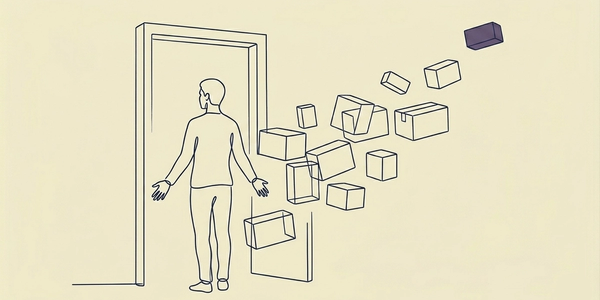
Most people find that the first few minutes of this are unimpressive: the writing feels obvious, repetitive, shallow. This is the performance clearing itself. What comes after it, if you stay, tends to be more interesting and more true.
The first few minutes of writing are usually the performance clearing itself. What comes after, if you stay, tends to be more true.
The Interior Practice
For leaders who work primarily in the register of speed, which is most leaders, the practice of deliberate slowness is itself the intervention. Not as a productivity technique, not as a way of improving cognitive output, but as a specific form of interior work: the practice of being present with your own thinking long enough to discover what is actually there.
What the practice tends to surface, over time, is a more accurate map of the leader's own interior landscape: what they genuinely care about, what they are uncertain about that they perform certainty around, what they are avoiding, what they are moving toward. Not as analysis, but as remembering. What the writing surfaces was already theirs, underneath the performance the whole time. The writing shows you things that direct reflection often misses, precisely because it bypasses the speed that direct reflection usually operates at.
The leader who knows what they actually think, before the room, before the performance, before the expectations of the role have organized the thinking, leads from a more grounded place. Not because the thinking is better in some abstract sense, but because it is more genuinely theirs. It comes from further in.
For five consecutive mornings, write by hand for ten minutes before engaging with any screen or external input. No prompts. No agenda. Write whatever is actually present, including the sense that nothing interesting is present. On day five, read back what you wrote on day one. Notice the distance between what you were performing at the start and what emerged by the end. That distance is the size of the gap this practice is designed to close.
The Weekly Alignment
One short piece each week. Not advice, and nothing to keep up with. A reminder, arriving on a Thursday, that the ground was always there.
Unsubscribe any time. Nothing else is sent.