It’s a grey morning, and I reach for my phone before I’ve had a single thought of my own. You know the reach, and you know your own version of it: the scroll, the feed, the news, the inbox opened before your feet hit the floor. There’s a part of me that wants to call it nothing, a harmless few minutes of numbing before the day asks anything of me. And there’s a deeper, more aware part that knows it isn’t that simple.
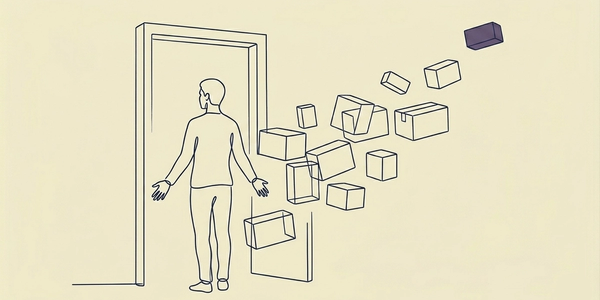
The content on the other side of that reach is not neutral. It isn’t blank noise I’m passing the time with, a harmless way to wake up slowly. Every piece of it was made by someone, and made on purpose, to hold me, to move me, to leave me feeling a certain way so that I’ll come back for more of it. In the ten minutes before I was even fully awake, I took in a headline written to frighten me, a life staged to make mine look small, an argument built to pull me onto a side, and a hundred quieter messages that all say the same old thing, that I’m behind, that I’m not enough, that the answer is out there and I’d better hurry. And so many of them arrive holding something to buy, a product, a program, a quick fix promising to close the very gap they just opened in me. None of that is an accident. Fear holds our attention, comparison holds it, outrage holds it longest of all, and our attention is exactly what’s being sold, most of it right back to us. We like to think we’re the ones scrolling through the content, when it’s closer to the truth to say that the content is scrolling through us.
We like to think we’re the ones scrolling through the content, when it’s closer to the truth to say that the content is scrolling through us.
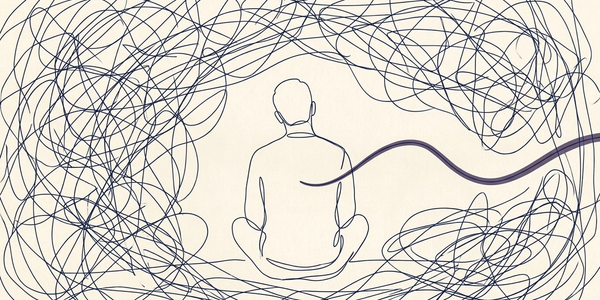
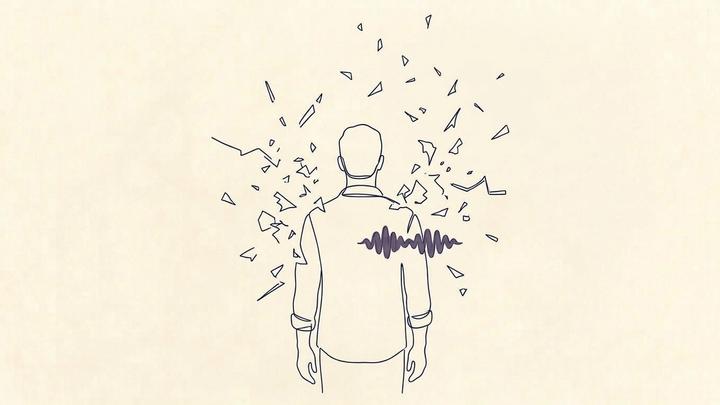
That content doesn’t stay outside me. If all I lost was the ten minutes, it would hardly be worth writing about, but what I lose is quieter and far more costly than the time. Tune into a station often enough and it stops sounding like a broadcast and starts sounding like your own voice. The feed’s read on what matters, its fears, its wants, its running scorecard of who’s winning, all of it seeps in and sets up house, until I’m carrying opinions I never actually arrived at and calling them mine. The external static doesn’t only take my attention, it scrambles my signal. It settles in on top of my own quieter voice and mixes itself all the way through it, until I can’t hear where one ends and the other begins, and I start to believe the scrambled version is me. And the part that unsettles me most is how ordinary this has become, how many of us have lived inside the noise so long that we no longer notice it’s there.
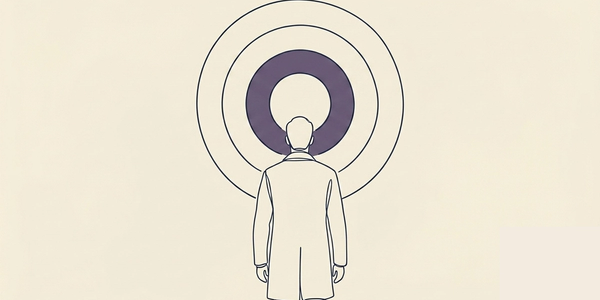
Let me explain what I mean by ‘your signal’, because it’s the one definition I most want you to take away. Your signal is your own true voice. It’s your knowing, the truest thing in you, the particular way you see and lead and love that no one else carries in quite your shape. It’s your core, the one real differentiator underneath every skill you’ve ever built, and it’s the piece of your humanity the world was actually waiting to hear from you. Not a version of you bent by someone else’s fear, not a scrambled signal wearing your name, but the real thing, the one note only you were made to play.
Signal is the everyday name for your own knowing: your own true voice, the truest thing in you, and the particular way you see and lead and love that no one else carries in quite your shape. It is the core underneath every skill you have built, and the piece of your humanity the world was waiting to hear from you. Not a version of you bent by someone else’s fear, and not a scrambled echo of another’s static, but the real thing, the one note only you were made to play.
Here’s the hard part, and it’s the whole of our current leadership problem: much of what we define as leadership is actually performing someone else’s signal, because we don’t stop leading when our signal gets scrambled. We lead from the scrambled version, and we do it with total confidence, certain it’s our own. We perform a borrowed idea of leadership, one we absorbed from the feeds and the rooms and the scoreboards, and we call it conviction, we call it strength, and we never once notice it isn’t ours. That’s the quiet enslavement almost no one names, not leaders who’ve gone silent, but leaders leading hard from a signal that was handed to them, sure the whole time that it came from within.
Look at what the external static of our culture actually teaches us about leadership. That it means staying ahead of the others, because we are separate and it’s every one of us for ourselves. That there is an enemy across the table to beat, a rival, a them to our us. That people are a resource to be spent and the earth is a supply to be drawn down, and that all of this is simply how the game is played. Push harder, win, protect your position, never let them see you unsure. We call it normal, we call it successful, and we lead from it without ever choosing it. But that was never leadership. It was the loud, borrowed signal of someone else, handed down to us as what leadership is supposed to be. The real work of leadership is quieter and harder, the daily practice of telling your own signal apart from the noise, and building from what’s actually yours, together with the people in front of you rather than against them.
None of this is new, and none of it needs a villain to run. The static works on us because it presses on a bruise we’ve carried since we were small, the belief that we are separate and not enough, that our worth is something we earn by belonging to the group and performing for our place in it. Long before the phone, the same message reached us in a hundred gentler packages, the faith that tied our worth to certain beliefs and conditions, the company that put it in the next title, the culture now that puts it in our best, most optimized self, every one of them selling the same quiet lie, that who we already are is not enough and the answer is somewhere out there. The people building it were handed that same story a little earlier, by people who loved them, and most of them believe they’re helping. There’s no one to fight here. There’s only a very old machine that profits when we forget who we are, and all of us, me on this grey morning included, who keep tuning in.
I got pulled in this morning, hypnotized by a screen before my feet hit the floor, and I’ll get pulled in again, and some days I’m most of the way into a borrowed opinion before I catch it. What’s changed isn’t that the static lost its pull. It’s that I can hear it a little more often now for what it is, and choose, some days, to come back home to my own signal instead.
The next time you notice the reach, before you answer it and again after, ask one honest question of whatever you just took in. Whose voice is this, and what is it trying to make me feel, or want, or sell me, or fear? You don’t have to argue with it or fix it. Simply naming it, this is the feed’s fear and not mine, this is the scoreboard’s idea of enough and not mine, is usually enough to loosen its grip and let your own signal back through.
Because here is the good news the static most needs you not to hear. It never once reached the signal underneath. However long you’ve been tuned to someone else’s station, however long you’ve led from a borrowed one, your own is still there, still playing quietly under all of it, exactly as it was before the world ever laid its noise on top. And that signal was never only yours to enjoy. It’s yours to give. There is something only you carry, a note the world has never heard in quite your shape, and there are people whose way forward runs straight through it, whom a borrowed signal will never quite reach. The real one does. So tune back in under all the noise, trust what you find there, and let it out where it’s needed. It was never noise to be managed. It is the reason you are here.
There’s a version of the grey-morning reach most of us know, the scroll or the feed or the inbox opened before we’ve had a thought of our own.
I’d love to hear about yours, not to fix it, just to name it.
When you catch yourself reaching, whose voice tends to be waiting on the other side, and what is it trying to make you feel, or want, or fear?
There’s nothing to get right here. Naming it plainly has a way of letting the next person see they’ve been carrying the same thing.
I’ll be in the thread.
The Weekly Alignment
One short piece each week. Not advice, and nothing to keep up with. A reminder, arriving on a Thursday, that the ground was always there.
Unsubscribe any time. Nothing else is sent.