Listen to this piece. 17 minutes, read by James.
It's Thursday night, and I've earned this.
That's not quite a thought, more of a feeling that arrives around 9PM, after a long week. The house is quiet, the work is as "done" as it's going to get, and somewhere inside me a small, reasonable voice makes its case: you've been going hard, you deserve to switch off, it's a Thursday night. Maybe just half a gummy, just to unwind, there's nothing wrong with wanting to relax.
And there isn't. If I paint this as a struggle against an obvious vice, I'm telling the wrong story here, because there's nothing "wrong" with any of it. I take the half-gummy, find the couch, and the TV goes on. At some point my phone is in my hand and I'm scrolling X, catching up on the "news" and some of the other vices X offers with nearly every scroll. An hour goes by, maybe more... probably more. It feels like rest. It feels exactly like the thing I told myself I'd earned.
It's the same night, only later. On the Thursdays I let myself notice, I get up from that couch a little emptier than I sat down. Faintly further away, from the day, from David at the other end of the couch, and from myself. The reach to close the small distance I felt at 9PM has, by 11PM, quietly widened it. And it isn't really invisible, though most nights I'd rather it were. Part of me knew, reaching for the gummy, that I was stepping around something rather than toward it, choosing the easier version of the night over the one that asked more of me. It isn't wrong, or bad, or a sin. It's just a choice, and it's mine. The whole move is so reasonable that I get to keep my own hand hidden from myself.
What I was reaching for was never the gummy, or the scroll, or the news. Those were just the nearest options, the ones that asked the least of me. What I wanted was to not feel the particular discomfort of being human at the end of a long week, the low hum of everything unfinished and unfelt. Somewhere a long time ago I learned a quiet trick for that discomfort: when it rises, disconnect, reach for something, fill the quiet, and tune out. I even learned to call it relaxing, though what I was actually doing was leaving, stepping out of my own humanity rather than settling back into it. The real rest, the kind I'm actually after, is the opposite move, staying with myself long enough to relax into my own being.
The world we live in has become so good at selling us disconnection dressed up as rest that it no longer looks like disconnection at all. It looks like self-care, and part of me could make a convincing argument that it is. None of this is a personal failing, and it isn't only mine. I didn't invent the reach for the gummy, and you didn't invent whatever your version of the reach is: the pour, the feed, the constant purchasing and consuming, the "too busy" of a full calendar, the second screen running while the first one plays. We were handed the reach so early, and so gently, that it never sounded like an instruction.
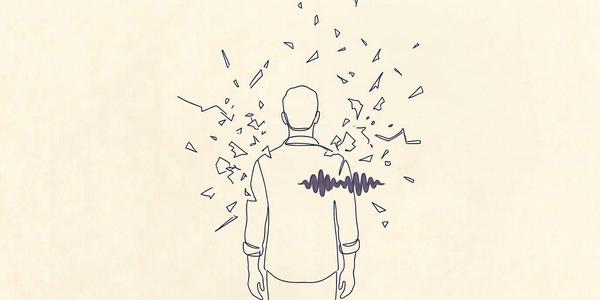
I've started to think of the reach as static, the everyday anaesthetic we don't recognize as being one. The low, constant reaching for input we've been taught to call rest, so ordinary and so sanctioned that it hides in plain sight, and it leaves us lonelier and more disconnected than the quiet it was meant to relieve. Because the static is always laid over a signal, and the signal never stopped broadcasting.
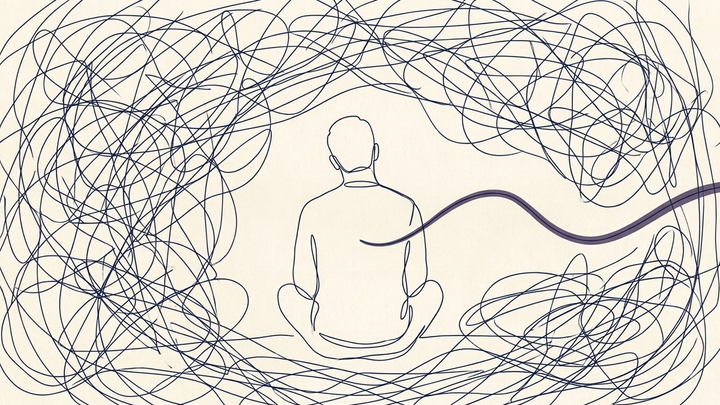
Static is the everyday name for a learned dissociation (disconnection) from who we really are: the manufactured, insatiable pull to reach outside ourselves rather than stay with and hear ourselves. We call that reach a hundred reasonable things: rest, play, work, busyness, productivity, or just life. Underneath all of it is the one thing it keeps us from hearing, our own knowing.
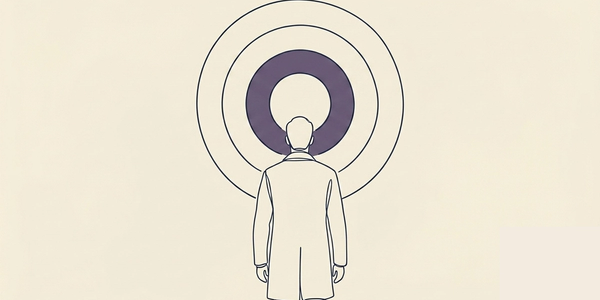
That signal underneath the static is your own knowing. Not a mood, not a preference about how to spend a Thursday, but the part of you that has always understood that you were made for more than the life you've settled into, that you're here to give something only you can give. It's the place you'd have to stand to answer the simplest and largest question there is, the one I've watched leader after leader go quiet when asked: what do you actually want. Not what you're supposed to want, not what the next room rewards, but what do you want. Most of us can't say, and it isn't because the answer isn't in us. It's that we haven't been able to hear ourselves over the noise long enough to find out. A lot of what we call anxiety, I've come to think, is that knowing pressing to be heard, the truest part of us straining against everything we've laid on top of it. You can't remember what you can't hear.
You can’t remember what you can’t hear.
We tune our signal out partly because the world trained us to. But there's another reason, one I don't love admitting: some part of me is relieved to. The signal doesn't only comfort us. It asks something of us. Hear it clearly and it will tell you how big you actually are, how much you're capable of, how much you're here to give and to love, and that's a heavier thing to carry than a small, manageable version of yourself. It isn't our smallness we're running from. It's our greatness. A part of us is running from the scale and scope of who we really are as leaders. Viewed through another lens, we're afraid of our own divinity. The static offers a way to stay smaller than we are, and some nights smaller feels safer.
It isn’t our smallness we’re running from. It’s our greatness.
Underneath the reaching is a distortion we absorbed so early we never thought to question it: that discomfort is a design flaw, a sign something has gone wrong. So we learn to smooth every rough edge, to treat the frictionless version of a life as the goal, and to give anything that falls short of it a quiet warning label. The hard conversation is awkward. The silence is unbearable. The feeling we didn't order is bad, or unsafe, or simply unwanted, something to manage away rather than meet. But the discomfort we keep designing out was never only noise. It's the exact place we hear ourselves, and it's the ground the truest things grow in: the unguarded conversation that goes somewhere neither of you planned, the closeness on the far side of awkwardness. The friction is trying to show us something about who we really are. Every time we reach past it, we don't only lose the chance to hear ourselves, we trade away the connection and the growth that are only found on the other side of it. We trade away our humanity, and our call to help lead forward.
I know the static is doing this because I know the other kind of Thursday, the ones where I make a different choice and feel the difference in my body by the end of the night. A Thursday where I call a friend I've let too much time pass, and we actually talk. A Thursday where I get into bed early with a book and my journal and let the day settle instead of drowning it out. A Thursday where David and I talk, really talk, past the logistics of the week and into whatever's actually going on. None of these are the easy option in the moment. The couch asks nothing of me. Reaching for the friend risks the awkwardness of the gap, the journal means meeting whatever's on the page, the real conversation means being seen when the smoother move is to be pleasant and somewhere else. The signal is almost never the easier choice. It's only ever the truer one, and truer, costs something the static is built to let me avoid.
For a long time I thought the reach was me running from connection. It's the opposite. I reach because I want connection so badly and can't, in that moment, find the harder door to the real thing. We were never as separate as the day keeps telling us, and some part of us knows it, so the ache for contact isn't a weakness to manage. It's the truest thing in us, reading the distance correctly and asking to close it. The trouble is that the static answers that real ache with a counterfeit, and the counterfeit works, which is exactly what makes it so hard to see. In the moment, the hit is real. The gummy takes the edge off, the phone lights up the same part of me that lights up when I'm around people, and for a little while I feel genuinely better. What it can't do is last, because it was never the real thing, only something shaped like it. And because it never nourishes, the ache comes back sharper, the reach comes faster, and the thing I grabbed to end the loneliness turns out to be the thing keeping it alive.
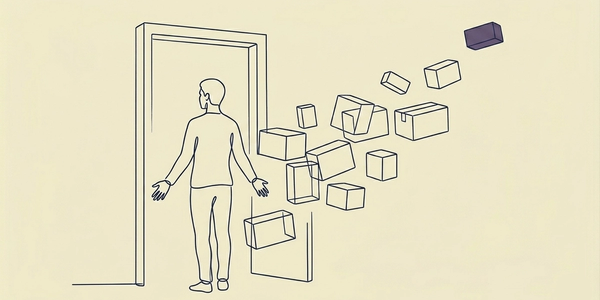
The way back to the connection we actually want rarely feels good going in. The signal is on the other side of the discomfort, not instead of it, and in a world we've designed to spare us every discomfort on demand, almost none of us walks toward it by choice. So life tends to do the clearing for us, and it isn't always gentle about it. The job ends, the diagnosis comes, the marriage breaks, or the drinking does. Maybe the last child leaves and the house goes quiet in a way no screen can fill. We can label these the "worst" things that happen to us, and they're hard beyond description, but anyone who's come out the far side of one knows the strange gift buried within it. For a while the static simply stops working. The noise loses its grip, and the signal underneath is suddenly, almost unbearably clear. These are doorways, not failures and not punishments, the moments something gets loud enough to cut through, and we finally hear what had been broadcasting under the noise the whole time.
I'm not romanticizing "the bottom", and I'd never wish one on anyone or send you looking for one. The doorways that get forced open can be brutal, and the point isn't to want them. The point is that we don't have to wait to be levelled or broken open to hear ourselves. The same clearing is available in far smaller and more ordinary ways, on any given Thursday, if we're willing to feel a little of the discomfort on purpose instead of reaching past it. A minute of quiet before the hand moves toward the phone. One real conversation instead of one more episode. Not because the discomfort is virtuous, but because it's the doorway, and the small ones are the ones we get to choose.
None of this arrives once and stays. I still reach, and I'll probably want to reach again this Thursday. The difference noticing the reach makes is smaller and better than arrival: I catch it sometimes now, mid-reach, and every so often I set the phone down and let the quiet in, and remember there was never anything to fix, only something to hear. That's the whole of it. Not a cure for the static, not a finish line where the noise is gone for good, but a returning, over and over, to the signal that was always underneath. This isn't the heroic redemption story we get told over and over. We forget, we reach, we catch ourselves, we come back, and the stumbling is part of our humanity, not a break from it. The coming back isn't the failure. The coming back is the human being, doing the most human thing there is. When we give ourselves the space to simply listen, we hear what has always been alive underneath the static: we hear our own voice.
The coming back isn’t the failure. The coming back is the human being, doing the most human thing there is.
So the questions I keep returning to aren't about getting rid of the static. It isn't going anywhere, and some Thursdays I'll keep saying yes. The truer ones are quieter. What am I so committed to not feeling that I'd trade the sound of my own life to avoid it? If it went quiet enough to hear the answer, what would I find I actually want? And then the question underneath even that, the one the noise keeps furthest out of reach: not only what do I want, but what am I here to give, and how is the world meant to be different because I am in it? Yes, you are that important. And yes, that can feel strange, overwhelming, even wrong. And no, none of those feelings negate how important and needed you really are.
Try this the next time you notice the reach. You'll know the moment, the small hand toward the phone or the pour or the remote, the quiet certainty that you've earned the disconnection. Before you answer it, stop, just for a minute, and don't. Let the discomfort you were about to numb be there, without fixing it or judging it, the way you'd let a sound in the next room be there. Notice what it actually is, under the urge to escape it. Then listen, longer than is comfortable, for whatever's been broadcasting underneath the noise the whole time. You don't have to do anything with what you hear. Hearing it is the whole practice. It was always there, the signal, waiting under the static for you to turn the noise down and remember it was yours.
The static's most convincing lie is that all of "this" is fine. We can live a whole life inside it, comfortable and quietly miserable, and never quite call it a problem, because on any given Thursday it isn't one. But the part of us that goes quiet in front of what do you actually want knows that comfortable and quietly miserable was never what we were made for. Saying that out loud, first to ourselves, is where I think leadership actually begins. Not the title or the org chart, but the willingness to feel the ache under the comfort and name it: this, whatever "this" is for you, is no longer enough.
Because hearing your own signal was never the whole of it. The signal doesn't only tell you who you are, it tells you what you're for, and hearing it asks something of you in return. That may be what leadership actually is, under all the versions of the word that have drifted away from it. Not performing a role well, but hearing the truest thing in you and putting it into action, so that everyone near you is handed the same permission to hear their own.
Our world doesn't need a more polished, more optimized, more comfortably numb version of you. It needs you to hear your own signal and to lead from there. Our world needs your leadership. Our world needs your humanity.
There's a version of a Thursday night most of us know: the reach for the thing that takes the edge off, the hour that feels like rest and somehow leaves us further away.
I'd love to hear about yours, not to fix it, just to name it.
What's the small, reasonable move you make to tune out, and what do you think you're actually reaching past when you make it?
There's nothing to get right here, and saying it plainly has a way of letting the next person see they've been carrying the same thing.
I'll be in the comments and notes on Substack
The Weekly Alignment
One short piece each week. Not advice, and nothing to keep up with. A reminder, arriving on a Thursday, that the ground was always there.
Unsubscribe any time. Nothing else is sent.